
Are Palm Leaf Plates Sturdy Enough for Hot Foods?

As businesses and consumers move away from plastic tableware, one question is asked more frequently than ever: Are palm leaf plates sturdy enough for hot foods?
Whether you're planning a wedding, running a catering business, managing a restaurant, or organising a corporate event, serving food on disposable tableware requires confidence in its durability. No one wants plates that bend, leak, or become soggy halfway through a meal.
Fortunately, palm leaf plates have gained a strong reputation for being one of the most durable eco-friendly alternatives available today. Made from naturally fallen palm leaves and processed without chemicals or synthetic coatings, these plates combine sustainability with exceptional strength.
In this guide, we'll explore how palm leaf plates perform with hot foods, why they are becoming increasingly popular, and what makes them a preferred choice for food service professionals.
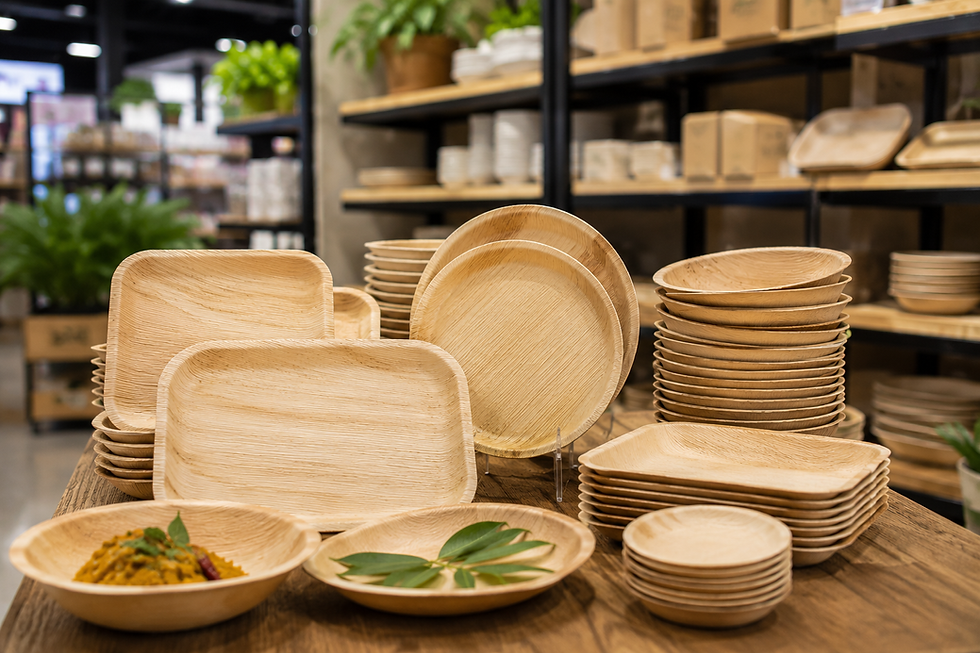
Understanding How Palm Leaf Plates Are Made
The durability of palm leaf plates begins with the manufacturing process.
Unlike paper plates that are made from processed pulp, palm leaf plates are produced using naturally fallen leaves collected from palm plantations. The leaves are thoroughly cleaned, sanitised, and heat-pressed into various shapes and sizes.
No chemicals, glues, waxes, or plastic coatings are added during production.
The natural fibre structure of the leaf remains intact, creating a product that is significantly stronger than many conventional disposable alternatives.
This natural strength is one of the main reasons palm leaf plates can handle demanding food service applications.
Can Palm Leaf Plates Handle Hot Foods?
The simple answer is yes.
Palm leaf plates are specifically known for their ability to handle hot meals without losing their shape or structural integrity.
Unlike thin paper plates that often become soft when exposed to moisture or heat, palm leaf plates maintain their firmness even when serving freshly cooked food.
They are commonly used for:
Rice dishes
Curries and gravies
Fried foods
Barbecue items
Noodle dishes
Snacks and appetisers
Desserts
Buffet meals
Their dense natural fibres provide excellent resistance to both heat and moisture, making them highly reliable for serving hot food.
Heat Resistance of Palm Leaf Plates
One of the biggest advantages of palm leaf tableware is its natural heat resistance.
Because the plates are formed using high-temperature heat pressing, they can comfortably handle foods served directly from cooking vessels.
Users frequently serve:
Hot rice
Steaming curries
Grilled meats
Fried snacks
Freshly prepared buffet dishes
without experiencing warping or structural failure.
The natural composition of the leaf allows the plate to withstand temperature variations while remaining comfortable to handle.
This makes palm leaf plates particularly useful for outdoor events, weddings, and catering services where food is often served immediately after preparation.
Palm Leaf Plates vs Paper Plates
When comparing eco-friendly tableware options, palm leaf plates consistently outperform paper plates in terms of strength and durability.
Palm Leaf Plates
Naturally strong
Heat resistant
Leak resistant
Premium appearance
Suitable for heavy meals
Paper Plates
May soften with moisture
Often require coatings
Less durable with hot foods
Limited performance for heavy meals
For businesses seeking a more reliable solution, palm leaf plates provide clear advantages.
Why Caterers Prefer Palm Leaf Plates
Professional caterers require tableware that performs consistently under demanding conditions.
Palm leaf plates provide several advantages:
Reduced Risk of Breakage
The strong natural fibre structure allows the plates to carry heavy food portions without bending or cracking.
Better Food Presentation
The natural grain pattern creates an attractive visual appeal that enhances dining experiences.
Suitable for Large Events
Palm leaf plates remain reliable throughout weddings, corporate functions, festivals, and outdoor gatherings.
Supports Sustainability Goals
Many clients actively seek environmentally responsible event solutions.
Using compostable palm leaf tableware helps businesses align with these expectations.
Choosing High-Quality Palm Leaf Plates
Not all palm leaf plates are manufactured to the same standard.
When purchasing palm leaf tableware, consider the following factors:
Thickness
Thicker plates generally provide better durability and load-bearing capacity.
Surface Finish
Well-manufactured plates should have a smooth, clean finish without cracks or weak points.
Quality Control
Reliable manufacturers maintain consistency across large production batches.
Food Safety Standards
Look for suppliers who can provide food-contact compliance documentation and quality certifications.
These factors ensure that the plates perform reliably in commercial food service environments.
Sustainability Benefits Beyond Strength
The appeal of palm leaf plates extends beyond durability.
They also offer significant environmental benefits.
Palm leaf plates are:
Biodegradable
Compostable
Plastic-free
Chemical-free
Made from naturally fallen leaves
Because no trees are cut during production, they represent a highly sustainable alternative to conventional disposable tableware.
For businesses seeking to reduce waste and improve environmental performance, palm leaf plates provide a practical solution.
Conclusion
So, are palm leaf plates sturdy enough for hot foods?
Absolutely.
Their natural fibre structure, heat resistance, moisture resistance, and ability to support heavy meals make them one of the strongest biodegradable tableware solutions available today.
Whether you're serving curries at a wedding, managing a catering business, or organising a corporate event, palm leaf plates provide a dependable and environmentally responsible alternative to plastic and paper disposables.
As demand for sustainable dining solutions continues to grow, palm leaf plates are proving that eco-friendly products can deliver both performance and style without compromise.


Comments