
Areca Leaf Plates vs Paper Plates

As more households and businesses move away from plastic, areca leaf plates and paper plates have become the two most common eco-friendly alternatives on the market. Both are marketed as sustainable, and both are widely available, but they differ significantly in how they are made, how they perform under real-world conditions, and how truly biodegradable they turn out to be once they reach a bin or a compost heap.

What Are Areca Leaf Plates?
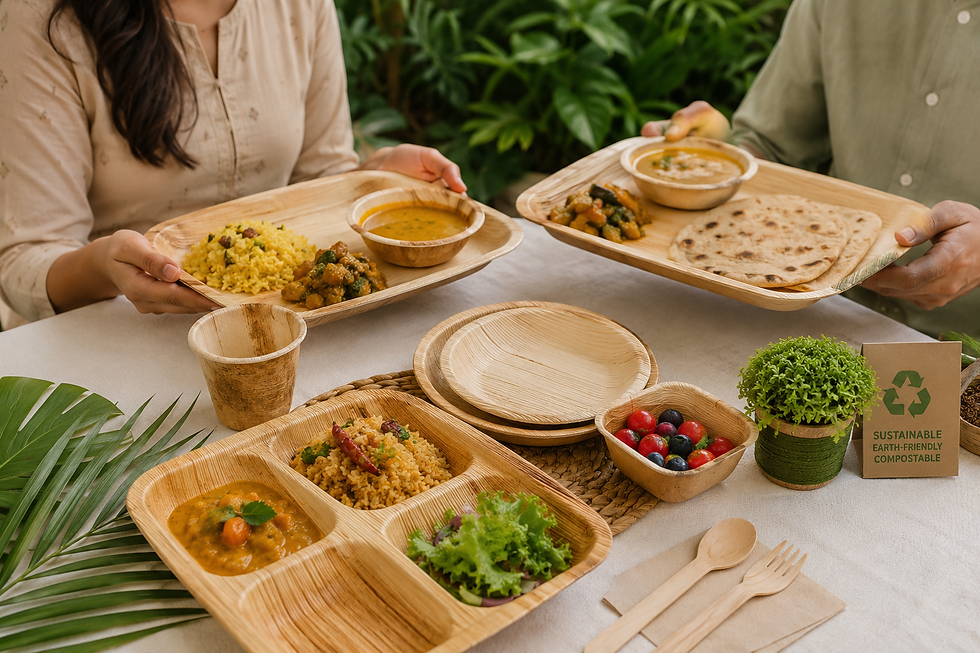
Areca leaf plates are made by cleaning and heat-pressing naturally fallen areca palm leaves into sturdy plates. No chemicals, bleach, adhesives, or coatings are used at any stage of production, which means the finished product is 100% natural. Each plate retains the leaf's original grain and texture, so no two plates look exactly alike, giving them a premium, handcrafted appearance that machine-moulded tableware can't replicate.
What Are Paper Plates?
Paper plates are manufactured from processed wood pulp that is bleached, pressed, and shaped into flat sheets. To make them usable for wet or oily food, most paper plates are coated with a thin layer of plastic or wax. This coating improves short-term water resistance but works against the plate's environmental credentials, since a plastic-lined product cannot fully return to the soil the way a truly biodegradable one can.
Key Differences between Areca Leaf Plates vs Paper Plates
Raw material: areca leaf plates use fallen leaves; paper plates use processed wood pulp, which requires more water and energy to manufacture.
Coating: paper plates are often plastic or wax-lined; areca leaf plates use no coating at all.
Strength: areca leaf plates handle oily and hot food without soaking through, sagging, or losing shape.
Composting: areca leaf plates break down in weeks in a home compost; coated paper plates often need industrial composting and can take far longer.
Appearance: areca leaf plates have a natural, premium finish that suits weddings and events; paper plates look more utilitarian.
Chemical exposure: areca leaf plates involve no bleaching agents, while some paper plates are chemically whitened during production.
Environmental Impact Compared
Manufacturing paper plates involves pulping wood, bleaching it, and often adding a plastic lining, a process that consumes considerable water and energy before the product even reaches a store shelf. Areca leaf plates, by contrast, use a leaf that has already fallen from the tree and would otherwise be treated as agricultural waste. This makes areca leaf production a form of upcycling rather than raw material extraction, which is one reason it's increasingly favoured by businesses trying to reduce their overall environmental footprint, not just their plastic use.
Cost and Availability
Paper plates are typically cheaper and more widely available in supermarkets, largely because they're mass-produced using established industrial processes. Areca leaf plates can cost a little more per unit, but the gap has narrowed considerably as manufacturing has scaled up in India, and many buyers find the difference worthwhile once they factor in the plate's superior strength and genuine compostability.
Which One Should You Choose?
Areca Leaf Plates vs Paper Plates. If your priority is genuine compostability and a premium, plastic-free look, areca leaf plates are the stronger choice. Many people assume paper plates are compostable at home simply because they are made of paper, but the plastic or wax lining on most paper plates means they need industrial composting facilities rather than a home compost bin. For events, catering, and everyday dining where sustainability matters, areca leaf plates are the more dependable eco-friendly option.
Best Use Cases for Each
Paper plates still have a place for very casual, low-stakes settings such as quick snacks or children's parties where cost is the main concern. Areca leaf plates are better suited to weddings, corporate events, restaurants, and any setting where both presentation and genuine sustainability matter, since they combine strength with a natural finish that photographs and serves well.
Both products serve a purpose, but businesses and households looking to fully eliminate plastic from their tableware, while also improving presentation, will find areca leaf plates the more consistent and reliable choice.
Quick Answer
Areca leaf plates are the stronger choice whenever true biodegradability and premium presentation matter, since they contain no plastic or wax coating. Paper plates remain useful for casual, low-cost settings, but most require industrial composting rather than breaking down safely at home.
Pros and Cons at a Glance
Areca leaf pros: fully compostable, no coatings, strong against oil and heat, premium natural look.
Areca leaf cons: slightly higher cost per unit than basic paper plates.
Paper plate pros: lower upfront cost, widely available in stores.
Paper plate cons: often plastic or wax-lined, weaker under oily or wet food, slower to break down.
Key Takeaways
Areca leaf plates are made from fallen leaves with no chemical coating, unlike most paper plates.
Paper plates commonly need industrial composting due to their plastic or wax lining.
Areca leaf plates handle oily, hot food better without soaking through.
For weddings, events, and premium dining, areca leaf plates offer a more elegant, sustainable finish.
Explore Envome's Areca & Palm Leaf Plates
If you'd like to see the natural texture and strength of areca leaf plates for yourself, browse Envome's areca and palm leaf plates for a closer look at sizes, finishes, and bulk options.
Why Choose Envome
Envome sources its areca leaf plates directly from chemical-free, heat-pressed production, giving businesses and households a dependable, premium alternative to plastic and paper. Explore the full collection of Envome's areca and palm leaf plates to find the right fit for your next event or daily use.



Comments